A good meal often begins long before the pan gets hot. It starts at the cutting board, with the sound of a knife moving through onions, herbs, carrots, tomatoes, or whatever the recipe asks for first. Cooking can look effortless when someone knows how to handle a knife well. The movements are calm, the pieces come out even, and the whole process feels less like a chore and more like a rhythm.
Knife Skills are not just for chefs in white jackets or people who cook for a living. They are useful for anyone who wants to feel more comfortable in the kitchen. Whether you are preparing a simple salad, chopping vegetables for soup, slicing fruit, or making dinner after a long day, knowing how to use a knife properly can make cooking faster, safer, and more enjoyable.
At first, knife work may seem intimidating. Sharp blades, quick movements, and unfamiliar techniques can make beginners nervous. But the truth is, good knife work is not about speed. It is about control. Once you learn the basics, speed comes naturally with practice.
Why Knife Skills Matter in Everyday Cooking
Knife Skills affect more than appearance. Yes, evenly chopped vegetables look beautiful, but the real benefit is how they cook. When pieces are similar in size, they cook at the same rate. This means your onions soften evenly, your potatoes roast properly, and your stir-fry does not end up with some vegetables mushy while others stay too firm.
Good knife work also saves time. When you know how to hold a knife, how to position your fingers, and how to guide ingredients on the board, prep becomes smoother. Instead of fighting with every onion or carrot, you move through the task with more confidence.
There is also a safety benefit. Many kitchen accidents happen not because knives are too sharp, but because they are dull, unstable, or handled carelessly. A sharp knife used correctly is easier to control. It cuts cleanly instead of slipping, which makes it safer than a dull blade that requires too much force.
In short, learning proper knife technique is one of the simplest ways to become a better home cook.
Choosing the Right Knife for the Job
You do not need a drawer full of expensive knives to cook well. In fact, too many knives can make things more confusing. For most kitchens, a reliable chef’s knife is the main tool. It can chop vegetables, slice meat, mince herbs, crush garlic, and handle most daily prep tasks.
A paring knife is useful for smaller work, such as peeling fruit, trimming vegetables, or cutting small items by hand. A serrated knife is best for bread, soft tomatoes, cakes, and anything with a firm outside and soft inside. These three knives can cover a surprising amount of kitchen work.
The knife should feel comfortable in your hand. It should not feel too heavy, too slippery, or awkward to control. A knife is personal in a way. What feels perfect for one person may not feel right for another. The best knife is the one you can hold confidently and use safely.
Holding the Knife With Confidence
The way you hold a knife changes everything. Many beginners grip only the handle, almost like holding a hammer. This can feel secure at first, but it often gives less control. A better grip is the pinch grip, where your thumb and index finger gently hold the blade near the handle while the rest of your fingers wrap around the handle.
This grip gives you more stability and control over the blade. It may feel unusual at first, but after a little practice, it becomes natural. The knife starts to feel like an extension of your hand rather than a separate object.
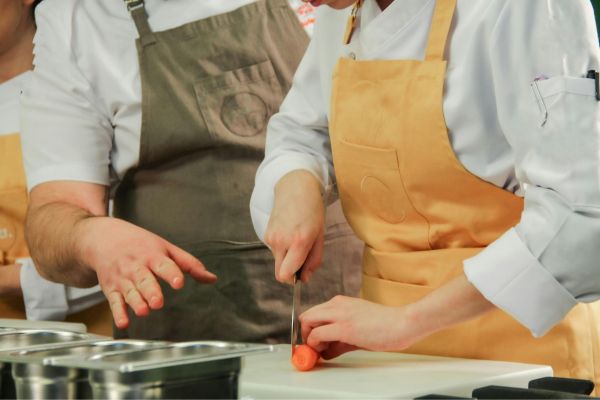
Your other hand matters just as much. The guiding hand should hold the food steady while keeping fingertips tucked away. Many cooks use what is often called the claw position. The fingertips curl inward, and the knuckles guide the side of the blade. This protects your fingers while helping you cut evenly.
It may feel slow in the beginning, but slow practice builds safe habits. Speed without control is never the goal.
Understanding the Basic Cutting Motions
Different ingredients need different movements. For many vegetables and herbs, a rocking motion works well. The tip of the knife stays close to the board while the back of the blade moves up and down. This is helpful when chopping herbs, garlic, onions, or celery.
For slicing, the knife should move forward and down in one smooth motion rather than pressing straight down. This helps the blade glide through food cleanly. It is especially useful for tomatoes, cooked meats, and delicate vegetables.
For tougher ingredients like carrots, potatoes, or squash, control is more important than force. Keep the food stable, use a firm cutting board, and cut flat surfaces whenever possible. If something rolls around, slice a small piece off one side to create a stable base before continuing.
These small habits make a big difference. A steady ingredient is easier and safer to cut.
The Difference Between Slicing, Dicing, and Chopping
Slicing means cutting food into thin or thick pieces, usually in a repeated motion. You slice onions, cucumbers, tomatoes, bread, fruit, and cooked meat. The goal is often to create pieces that look clean and consistent.
Dicing means cutting food into small cubes. It is common for onions, carrots, potatoes, peppers, and vegetables used in soups, sauces, and salads. A good dice helps ingredients cook evenly and blend well into a dish.
Chopping is a little less exact. It usually means cutting food into smaller pieces without worrying too much about perfect shape. You might chop herbs, greens, nuts, or vegetables for a rustic soup or stew.
Knowing the difference helps you understand recipes better. When a recipe says dice, it usually wants smaller, even pieces. When it says chop, there is often more flexibility. Cooking becomes easier when these words no longer feel vague.
Keeping Your Knife Sharp and Safe
A sharp knife is one of the most important parts of good knife work. A dull knife drags, slips, and makes cutting harder than it needs to be. Many people are afraid of sharp knives, but dull knives are often more dangerous because they require more pressure.
Sharpening and honing are not exactly the same. Honing straightens the edge of the blade and helps maintain sharpness. Sharpening removes a small amount of metal to create a fresh edge. Both have their place, though most home cooks do not need to sharpen constantly.
How you store your knives also matters. Throwing knives loosely into a drawer can damage the blades and create safety risks. A knife block, magnetic strip, or blade guard keeps edges protected and hands safer.
Washing knives by hand is usually best. Dishwashers can dull the blade, damage the handle, and cause knives to knock against other utensils. A quick wash, dry, and safe storage habit helps your knife last longer.
Working With a Stable Cutting Board
A knife is only as safe as the surface beneath it. A cutting board that slides around makes even simple chopping risky. One easy solution is to place a damp towel or cloth under the board. This keeps it steady while you work.
The board should be large enough for the task. A tiny cutting board may seem convenient, but it can make prep messy and cramped. A larger board gives ingredients space and helps you move more comfortably.
It also helps to keep your workspace organized. Push finished ingredients to one side or move them into a bowl. Clear away peels, stems, and scraps as you go. A crowded board slows you down and makes accidents more likely.
Good cooking often comes from small systems like this. When your space is calm, your hands work better.
Practicing Knife Skills Without Pressure
The best way to improve Knife Skills is through simple repetition. You do not need a complicated recipe. Practice with onions, potatoes, carrots, cucumbers, or herbs. These everyday ingredients teach you almost everything you need to know.
Start slowly. Focus on grip, finger position, and steady cuts. Try to make pieces similar in size, but do not obsess over perfection. Even professional cooks developed their technique through years of repetition.
Over time, your cuts will become cleaner. Your hands will feel more relaxed. You will stop thinking about every movement and begin to develop a natural rhythm. That is when cooking starts to feel different. Prep becomes less stressful, and recipes feel more approachable.
Mistakes are part of learning. Uneven carrots and awkward onion slices are not failures. They are practice.
Bringing Confidence Into the Kitchen
Knife work can change the way you feel about cooking. When you can prepare ingredients with ease, meals come together more smoothly. You are less likely to avoid recipes because they involve chopping. You may even begin to enjoy the quiet focus of prep.
There is something grounding about standing at a cutting board and working with fresh ingredients. It slows the mind a little. It connects you to the food before it becomes a finished dish. In a busy world, that kind of simple attention can feel surprisingly satisfying.
Good Knife Skills do not mean acting like a professional chef. They mean knowing enough to cook with confidence, safety, and a little more pleasure.
Conclusion
Mastering Knife Skills is one of the most valuable steps you can take in the kitchen. It improves safety, saves time, helps food cook evenly, and makes everyday cooking feel less complicated. From learning the right grip to understanding how to slice, dice, and chop, each small technique adds up to a smoother cooking experience.
The beauty of knife work is that it rewards patience. You do not need to be fast on the first day, and you do not need perfect cuts to make good food. With practice, your hands become steadier, your movements become more natural, and the cutting board becomes a place of confidence rather than hesitation.
In the end, good cooking is built on simple skills repeated often. A sharp knife, a steady board, and a calm hand can take you a long way.