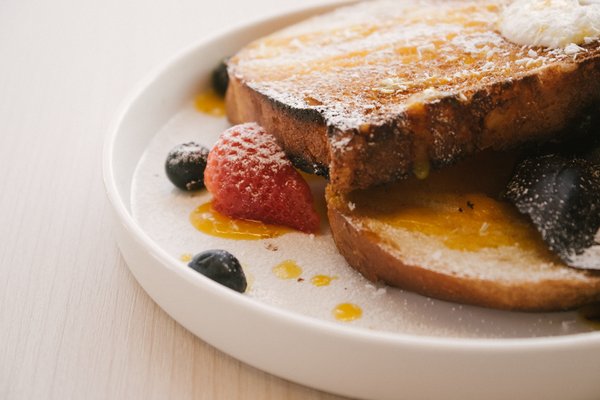
Good French toast has a little contrast: crisp, buttery edges around a soft, gently set middle. It’s the sort of breakfast that makes an ordinary morning feel unhurried, yet it doesn’t require special equipment or a long ingredient list. The trick is choosing bread that can hold the custard and giving each slice enough time in the pan.
These French toast recipes begin with a dependable classic, then branch into citrus-spiced slices, stuffed French toast, and a baked French toast casserole for mornings when everyone wants to eat together.
Choose Bread That Can Handle the Custard
Brioche makes rich, tender French toast, while challah brings a similarly soft crumb with a slightly lighter finish. Thick-cut white sandwich bread is excellent for easy French toast on a weekday. Sourdough delivers a chewier center and a welcome tang, especially with fruit toppings.
Aim for slices about 3/4 to 1 inch thick. Very thin bread can turn floppy before the middle cooks. Slightly stale bread is useful because it absorbs liquid without collapsing, but fresh bread works too. If yours is especially soft, leave the slices uncovered for 20 to 30 minutes or dry them briefly in a low oven.
Match Soaking Time to the Loaf
For standard sandwich bread, a quick dip of a few seconds per side is often enough. Thicker brioche or challah can rest in the custard for roughly 10 to 20 seconds per side. Watch the bread rather than the clock: it should feel moistened throughout, not fall apart when lifted.
A Classic French Toast Recipe for Four
This skillet version makes approximately eight slices, enough for four moderate servings. Have ready eight thick slices of bread, four large eggs, one cup of milk, one tablespoon of sugar, one teaspoon of vanilla extract, one teaspoon of ground cinnamon, a pinch of salt, and about two tablespoons of butter for cooking in batches. Whole milk produces a rich result, but a milk you regularly use at home can work.
Whisk, Dip, and Cook
Whisk the eggs thoroughly in a wide, shallow dish before adding the milk, sugar, vanilla, cinnamon, and salt. Breaking up the egg whites first helps prevent streaks of cooked egg from clinging to the bread. Cinnamon may float at first; give the mixture another stir between batches.
Warm a nonstick or well-seasoned skillet over medium-low to medium heat. Melt a little butter until it foams but does not brown deeply. Dip two slices into the custard, let excess liquid drip off, and place them in the skillet without crowding. Cook for about two to three minutes on the first side and another two to three minutes on the second, adjusting the heat as needed.
The exterior should be golden, and the center should be cooked through rather than wet with raw egg mixture. Repeat with the remaining bread, adding butter between batches. Keep finished slices on a wire rack set over a baking sheet in a 200°F oven if you’re serving everyone at once. A rack preserves the edges better than stacking hot slices on a plate.
French Toast Variations Worth Waking Up For
Orange and Cardamom French Toast
Add finely grated orange zest and a small pinch of ground cardamom to the classic custard. The citrus brightens rich brioche without requiring extra sugar. Finish with orange segments, plain yogurt, and a modest drizzle of honey. Avoid pouring orange juice into the mixture; too much added liquid can make the slices soggy.
Stuffed French Toast With Berries
Spread one or two tablespoons of softened cream cheese onto one slice of thick bread, add a thin layer of sliced strawberries, then close with a second slice. Press the edges gently, dip the sandwich briefly on both sides, and cook over medium-low heat. Give the thicker sandwich additional time so its center warms and the egg coating cooks completely. Serve with extra berries rather than a heavy filling that spills into the pan.
Banana and Cinnamon French Toast
Top freshly cooked slices with banana coins warmed in a little butter and a pinch of cinnamon. A spoonful of chopped toasted walnuts adds crunch. This variation is especially good with sturdy sourdough, whose tang offsets the banana’s sweetness.
Make-Ahead Baked French Toast
For a relaxed weekend gathering, cut eight thick bread slices into large cubes and arrange them in a buttered baking dish. Whisk six eggs with two cups of milk, two tablespoons of sugar, vanilla, and cinnamon. Pour over the bread, press the cubes gently into the liquid, cover, and refrigerate overnight.
The next morning, bake uncovered at 350°F for approximately 35 to 45 minutes, or until the top is browned and the center is set. A cold, deep dish may need longer. For a reliably cooked egg casserole, check that the center reaches 160°F with a food thermometer. Scatter berries on top after baking to keep them fresh and bright.
Easy Toppings for a Brunch Table
Choose something juicy, something creamy, and something crunchy: raspberries, Greek yogurt, and toasted almonds work beautifully together. Warm apples with pecans or fresh strawberries with lightly sweetened ricotta are equally inviting. Set syrup on the side so everyone can decide how sweet their French toast should be. Round out the table with scrambled eggs or fresh fruit salad; both make natural companions to a richer breakfast.
Make-Ahead, Storage, and Reheating Tips
You can whisk the custard the evening before and refrigerate it in a covered container; stir again before dipping. Do not leave egg-and-milk mixtures sitting at room temperature while you prepare other brunch dishes. Once cooked, refrigerate leftover French toast promptly in a sealed container and eat it within three to four days.
Reheat slices in a toaster oven or on a baking sheet until hot throughout; this restores more texture than the microwave. For longer storage, freeze cooled slices in a single layer before transferring them to a freezer bag with parchment between pieces. That way, one breakfast can be reheated at a time.
Frequently Asked Questions
Why is my French toast soggy in the middle?
The bread may have soaked too long, the slices may be too thick for the cooking temperature, or the pan may be too hot. Use a shorter dip and moderate heat so the custard has time to set.
Can I make French toast without milk?
Yes. Unsweetened oat or soy milk can replace dairy milk in many recipes. The taste and browning may change slightly, so cook one test slice before making the whole batch.
Is fresh bread or day-old bread better?
Day-old bread is generally easier to handle because it holds its shape when dipped. Fresh bread can still make delicious French toast if you use a gentler, shorter soak.
A Cozy Breakfast, Your Way
The best French toast recipes are adaptable: start with good bread, lightly seasoned custard, and patient cooking, then follow the morning’s mood. Keep the classic skillet version for quiet days, pull out the stuffed variation for a treat, and save the baked version for a table full of people. The golden edges are worth the few extra minutes.