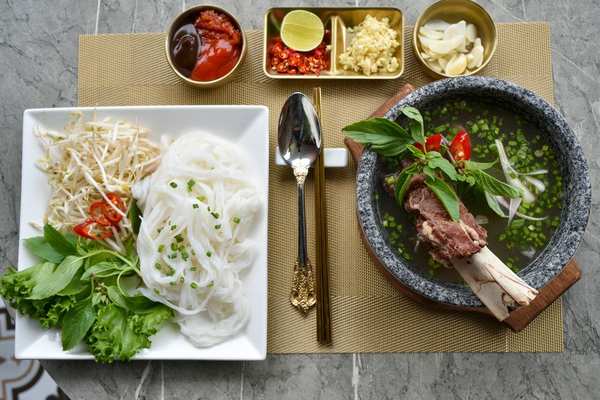
Few Vietnamese dishes are as instantly recognisable as pho: a clear, aromatic broth poured over rice noodles and finished with tender beef, herbs, lime, and fresh garnishes. For beginners, the ingredient list can make homemade pho look intimidating. In practice, the process is manageable once you separate it into three jobs: build a clean broth, prepare the noodles correctly, and assemble each bowl just before serving.
This guide focuses on beef pho, or pho bo, because it shows the core techniques clearly. Good pho is balanced rather than aggressively spicy or sweet. Beef gives depth, charred onion and ginger add warmth, whole spices provide fragrance, and fish sauce supplies savoury salinity without dominating the bowl.
Start with the broth, because it defines the bowl
For a generous home batch, use about 4 to 5 pounds of beef bones in a large stockpot. Marrow bones add richness, while knuckle, joint, or neck bones contribute body. A piece of brisket or chuck can provide cooked meat for serving and deepen the beef flavour. Cover the bones with cold water, bring them briefly to a boil, then drain and rinse them. This blanching step removes much of the foam and residue that can cloud the finished broth.
Return the cleaned bones to a washed pot, add fresh water, and bring it to a gentle simmer. Avoid a hard rolling boil, which can make the broth cloudy and heavy. Skim the surface during the first hour whenever foam appears.
Char the onion and ginger
Halve one or two onions and split a large piece of ginger lengthwise. Char the cut surfaces under a broiler, over a gas flame, or in a dry heavy pan until they develop dark patches and a toasted aroma. Rinse away loose burnt flakes before adding the aromatics to the broth. This step gives Vietnamese noodle soup much of its distinctive roasted fragrance.
Toast the whole spices gently
Pho spice combinations vary, but star anise, cinnamon or cassia, cloves, coriander seed, and fennel seed are common. Toast them in a dry pan just until fragrant, then place them in a spice bag or fine-mesh infuser. Start conservatively. The broth should smell aromatic without tasting like spiced tea.
Season gradually instead of chasing one dominant flavour
After the broth has simmered for several hours, season with fish sauce and a modest amount of sugar. Rock sugar is traditional in many pho recipes, but ordinary sugar can work when necessary. Add both gradually, tasting between additions. The broth should be savoury first, lightly sweet in the background, and fragrant from the spices.
A useful trick is to taste a spoonful of broth with a small piece of cooked rice noodle. Broth that seems slightly assertive on its own can become balanced once noodles, beef, and herbs dilute each mouthful. If you cook brisket in the pot, remove it when tender, cool it, and slice it thinly across the grain.
Prepare rice noodles without making them mushy
Pho uses flat rice noodles, often sold as banh pho. Fresh noodles need only brief cooking, while dried noodles are usually soaked or boiled according to their thickness and package directions. The most common beginner mistake is overcooking them before they reach the bowl.
Cook the noodles until tender but still resilient, drain them promptly, and portion them into serving bowls. Do not leave hot noodles sitting in cooking water, because they continue absorbing liquid and can turn soft and sticky.
Choose cooked beef, raw sliced beef, or both
A beef pho bowl may contain brisket, flank, tendon, meatballs, or very thin slices of raw beef that cook when boiling-hot broth is poured over them. For a first attempt, sliced cooked brisket is the easiest option because doneness is already controlled.
If using raw beef, choose a tender cut such as eye of round or sirloin and slice it paper-thin across the grain. Partially freezing the meat for 20 to 30 minutes makes thin slicing easier. Arrange only a light layer over the noodles so very hot broth reaches it immediately. Anyone who needs to avoid undercooked meat should use fully cooked beef instead.
Build each bowl at the last moment
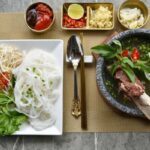
Place cooked rice noodles in a warm bowl, add sliced beef, then ladle in piping-hot broth. Finish with sliced scallions and onion. Serve lime wedges, fresh herbs, bean sprouts, sliced chilli, and sauces alongside so each person can adjust the bowl to taste.
Cilantro is common, while Thai basil and other Vietnamese herbs may appear depending on regional style and availability. Hoisin and chilli sauce are often served at the table in the United States, although tasting the broth before adding strong condiments lets you appreciate the balance you worked to build.
For a practical dinner plan, make the broth on Saturday, strain and chill it overnight, then remove excess hardened fat on Sunday. Reheat only what you need, cook fresh noodles, slice the meat, and set out garnishes. This turns a time-intensive pho recipe into an easy meal with little last-minute work.
How to fix common homemade pho problems
If the broth is cloudy, the usual causes are a strong boil, inadequate skimming, or skipping the bone-rinsing step. If it tastes flat, first check savoury depth and saltiness with fish sauce, then sweetness, and finally aroma. If star anise or cinnamon becomes too strong, remove the spice bag and dilute the broth slightly before rebalancing the seasoning.
Readers building a broader Vietnamese home-cooking collection can also explore Vietnamese dipping sauces, Vietnamese spring rolls, and Vietnamese coffee alongside this dish.
Frequently asked questions
How long should pho broth simmer?
Beef pho broth is usually simmered for several hours so bones, meat, aromatics, and spices have time to contribute flavour. A gentle simmer matters more than aggressively boiling the pot. Roughly four to six hours can produce a satisfying home version, although longer methods are common.
Can I make pho broth a day ahead?
Yes. Chill the broth separately from noodles and garnishes, refrigerate it promptly, remove excess solidified fat if desired, and reheat it thoroughly before assembling fresh bowls.
What noodles are used in pho?
Pho uses flat rice noodles known as banh pho. They come fresh or dried and in several widths. Follow the package directions and avoid overcooking, since they soften slightly more when hot broth is added.
Is homemade pho supposed to be spicy?
No. The broth is primarily beefy, savoury, and aromatic rather than hot with chilli. Diners can add sliced chilli or chilli sauce at the table, making the heat level easy to customise.
Balance matters more than complexity
Homemade pho rewards patience more than advanced technique. Clean the bones, keep the broth at a gentle simmer, char the aromatics, use whole spices with restraint, and season in stages. Once those fundamentals are right, the noodles and toppings are straightforward. Your first pot does not need dozens of ingredients; it needs a broth in which beef, ginger, onion, spice, and fish sauce each contribute without overwhelming the others.