Choosing a Thai curry paste can feel harder than cooking the curry itself. The chillies, aromatics, toasted spices and intended cooking style all shape the finished dish.
A Thai curry paste is a concentrated seasoning base rather than a complete sauce. It may contain chillies, shallots, garlic, lemongrass, galangal, coriander root, makrut lime zest, spices, salt and shrimp paste in different proportions. Other ingredients are added later, so the same paste can produce noticeably different curries.
Red curry paste: the versatile all-rounder
Red curry paste is commonly built around dried red chillies, which provide its colour and a deep, rounded chilli flavour. Typical supporting ingredients include lemongrass, galangal, garlic, shallots, coriander root, makrut lime zest and shrimp paste. Some recipes also include coriander seed, cumin or peppercorns.
It is one of the most adaptable choices for home cooking. Use it with coconut milk for a classic red curry, stir a smaller amount into soup, or fry it with meat, tofu or vegetables. It works well with chicken, duck, bamboo shoots, pumpkin and aubergine.
In the red curry vs green curry debate, red is not automatically hotter. Dried red chillies can be mild or fierce, and commercial brands vary widely. The amount of paste used often affects heat more than its colour.
Green curry paste: fresh, herbal and potentially fiery
Green curry paste gets its colour from fresh green chillies and green aromatics. It shares several ingredients with red paste, but fresh chillies give it a brighter, grassier character. Coriander and other green ingredients may deepen the colour, while Thai basil is normally added to the finished curry.
Green curry suits chicken, fish balls, tofu, Thai aubergines, bamboo shoots and courgettes. Coconut milk softens the chilli heat, while basil and makrut lime leaves reinforce its fresh aroma.
Many menus describe green curry as mild, but traditional versions can be very hot because fresh green bird’s eye chillies are powerful. When trying a new jar, begin with less paste than the recipe suggests and add more after tasting.
Yellow curry paste: warm spices and gentle richness
Yellow Thai curry paste is associated with turmeric, which gives it a golden colour, along with dried chillies and warm spices such as cumin, coriander and curry powder. The flavour is usually earthy and mellow rather than sharply herbal.
It suits potatoes, onions, chicken, fish, tofu and cauliflower. A yellow curry made with coconut milk is an approachable choice for diners who enjoy aromatic spice without aggressive heat.
Do not confuse yellow curry paste with generic curry powder. The paste includes fresh aromatics and moisture, while curry powder is a dry spice blend. They behave differently and are not direct substitutes.
Panang curry paste: concentrated and aromatic
Panang paste is related to red curry paste but is usually intended for a thicker, richer curry with less liquid. It may include toasted spices and peanuts, although recipes and commercial products differ. The finished curry is often fragrant with makrut lime leaves.
Panang is well suited to beef, pork, chicken, tofu or roasted vegetables. It is normally served as a coating sauce rather than a thin bowl of curry. Anyone with a peanut or shellfish allergy should read the full ingredient label instead of relying on the product name.
Massaman curry paste: warm, complex and slow-cooked
Massaman paste combines Thai aromatics with spices linked to Persian, South Asian and Malay culinary influence. Cardamom, cinnamon, cloves, cumin, coriander seed, nutmeg or mace may appear alongside dried chillies, lemongrass, galangal and shallots.
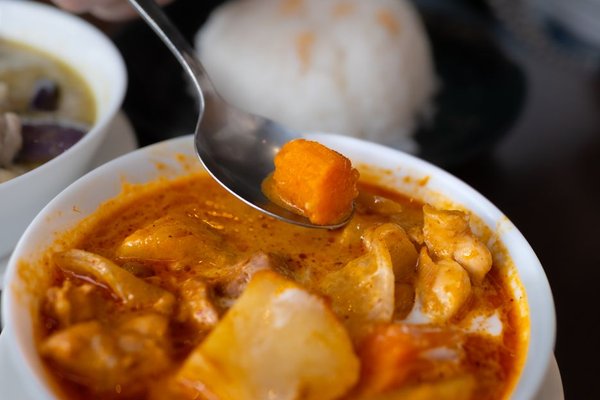
It is used for a rich curry that commonly includes coconut milk, potatoes, onions, tamarind and peanuts. Beef and chicken are popular, but mushrooms, tofu or firm vegetables also work. Its heat is often gentler than green or red curry, while its flavour is more layered and spice-driven.
Massaman is not simply a mild red curry. Its toasted spices and sweet-sour balance give it a distinct identity, and it usually benefits from slower cooking so meat becomes tender and potatoes absorb the sauce.
Other Thai curry pastes worth knowing
Jungle curry paste
Jungle curry, or gaeng pa, is typically made without coconut milk. Its paste creates a hot, aromatic broth with herbs, vegetables and meat. Without coconut richness to soften the chillies, the finished dish can taste especially intense.
Sour curry paste
Thai sour curry paste is used for sharp, broth-like curries often balanced with tamarind and palm sugar. It is commonly paired with fish, prawns or vegetables.
Prik khing paste
Prik khing is generally used for a dry-style curry stir-fry rather than a bowl of sauce. It is excellent with green beans, pork, chicken or tofu, with makrut lime leaves added for fragrance.
How to choose the right paste
Choose red when you want flexibility, green for a fresh herbal profile, yellow for warm spice, Panang for a thick sauce, and Massaman for a slower, gently spiced curry. For a lighter broth, explore sour or jungle curry; for a dry stir-fry, try prik khing.
A practical tasting method is to fry one teaspoon of paste in a little neutral oil or coconut cream, then stir in several tablespoons of coconut milk. Simmer briefly and taste. This small test reveals the paste’s heat, saltiness and aroma before you commit a full tin of coconut milk and all your ingredients.
Using shop-bought Thai curry paste well
Fry the paste before adding most of the liquid. A minute or two in oil or the thick part of coconut milk helps release aromatic oils and removes the raw edge, but control the heat so it does not burn.
Season only after tasting. Commercial Thai curry paste may already contain substantial salt or shrimp paste. Add fish sauce, sugar and lime gradually. Check whether the paste is vegetarian or vegan, as traditional versions commonly contain shrimp paste and finished curries may use fish sauce.
Frequently asked questions
Which Thai curry paste is the mildest?
Massaman and yellow curry are often milder, but there is no guaranteed ranking. Chilli varieties, recipes and brands differ, so begin with a small amount.
Can red curry paste replace green curry paste?
It can produce a tasty curry, but the flavour will change. Red paste is deeper and based on dried chillies, while green paste is fresher and more herbal.
Does every Thai curry contain coconut milk?
No. Jungle curry and many sour curries are commonly made without it. Coconut milk is central to several familiar curries, but not every Thai curry.
How long does opened curry paste last?
Follow the package instructions, refrigerate it promptly, use a clean spoon and discard it if its smell, colour or texture changes unexpectedly. Freezing small portions may help when the manufacturer permits it.
Understanding the differences
Colour is a useful starting point, not a complete Thai curry guide. Focus on the type of chilli, the balance of fresh aromatics and dried spices, and whether the paste is intended for a creamy curry, broth or dry stir-fry. Once those differences are clear, choosing a Thai curry paste becomes less about guessing from the label and more about matching its character to the meal you want to cook.